
ABOUT
A long-running connection,finally made public.
Sidallica is the point at which a lifelong relationship with music becomes a public artist project—floor-focused, genre-fluid and launching from Delhi NCR in 2026.
Delhi NCR, India · Formal DJ training since 2016 · Public launch 2026
Biography opening
Music came long before the artist project.
Introduced to Metallica at five, Siddhant grew up across rock, metal, pop, disco and Bollywood before electronic music opened another world. Even the name Sidallica predates the project—it began as a childhood gamertag around the age of nine.
Formal DJ training began in 2016 at Infini Music Academy. Years at the University of Waterloo widened the palette further. Returning to India in late 2023 placed that journey inside a rapidly growing electronic scene—leading to a Techno Takeover India masterclass with Samantha Togni, the decision to join TakeOver Music Academy, and the public launch of Sidallica in 2026.
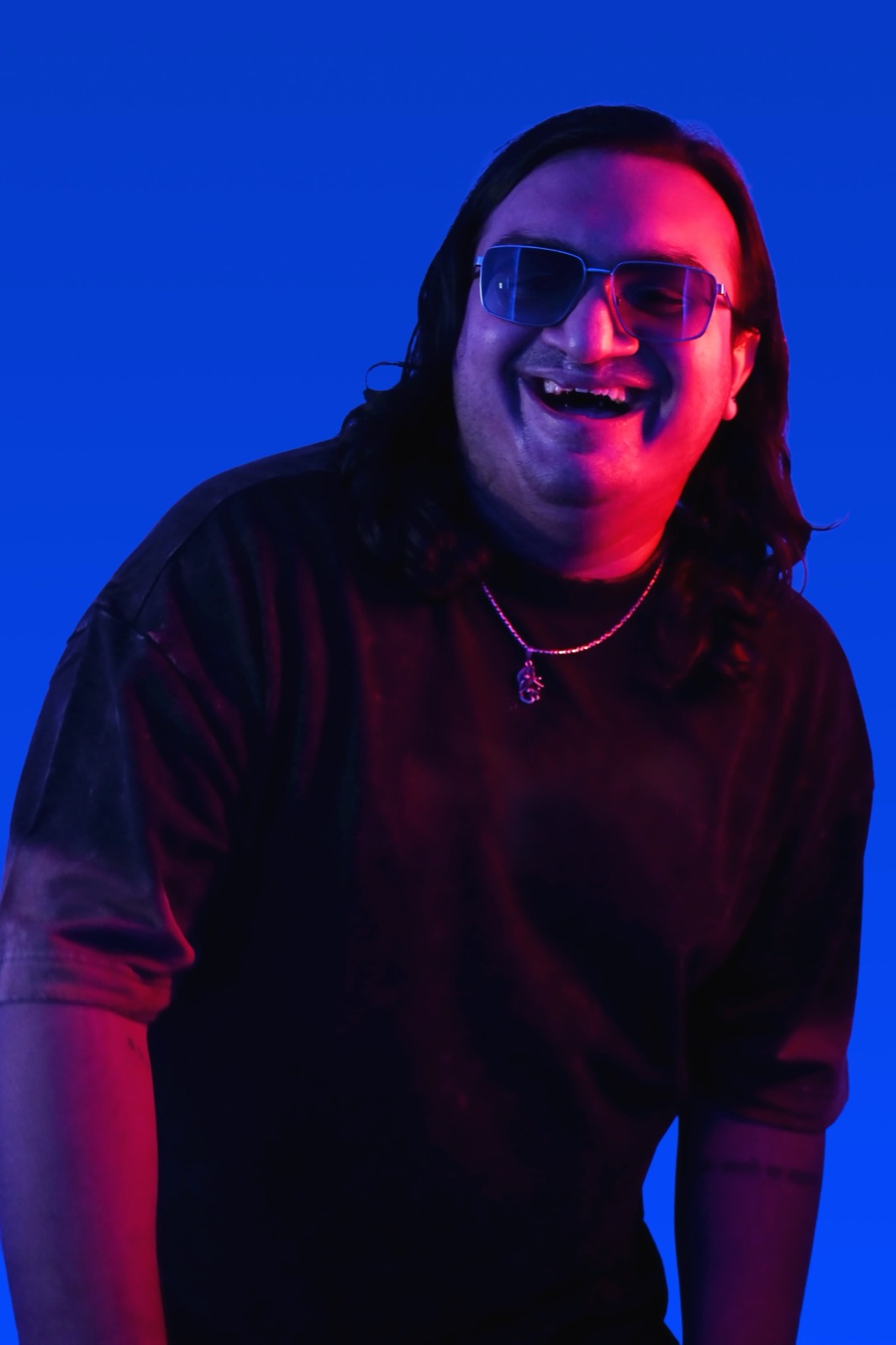
Portrait · About
Artist chronology
Chronology
The path from early musical foundations to the 2026 public launch—grounded, not mythologised.
Age 5
Age 5
Musical foundation
Introduced to Metallica by his mother at five, Siddhant grew up in a musical world where rock, metal, pop, disco and Bollywood rarely stayed separated—Elvis Presley, AC/DC, Queen and Metallica alongside ABBA, Michael Jackson, Bryan Adams, Britney Spears and the peak Bollywood sound of the early 2000s.
That breadth established an early instinct: music mattered for what it could make you feel—melody, aggression, rhythm, tension and release—not because it belonged to a category.
Age 9
Age 9
Sidallica
Sidallica began as a childhood gamertag around the age of nine.
It remained part of Siddhant’s identity across online spaces long before it became an artist name—so when the project finally needed a public identity, inventing a new persona felt unnecessary.
2010
2010
Electronic music at scale
At ten, Siddhant attended an Edward Maya performance in the rain—his first experience of electronic music as atmosphere, spectacle and collective energy rather than tracks alone.
Around the same period he began learning guitar, opening the door further into guitar-driven music through artists such as Green Day and Linkin Park while electronic discovery accelerated in parallel.
Early 2010s
Early 2010s
Electronic expansion
Skrillex belonged to the earliest major wave of electronic discovery, connecting naturally with existing metal roots through aggression, distortion and sound design—alongside Avicii, Hardwell, Swedish House Mafia, Martin Garrix, Daft Punk, David Guetta, Tiësto, KSHMR, Major Lazer and others defining that expanding landscape.
The palette widened through bass, festival electronic music, trap, trance, psytrance, house and techno.
2015
2015
Live electronic culture
Seeing Skrillex live in Gurgaon made the scale of the culture tangible, while broader Indian, South Asian and global electronic approaches continued widening the possibilities.
Among those discoveries was Charlotte de Witte, whose sets became one of Siddhant’s earliest meaningful gateways into techno.
2016
2016
Formal DJ training
Siddhant began formally learning DJing at Infini Music Academy, establishing the technical foundations behind an interest that had already been developing for years.
2018–2023
2018–2023
University of Waterloo
Undergraduate years in Canada widened the palette further—house, progressive and melodic electronic music grew increasingly important alongside techno, trance, bass and harder styles.
An elective centred on The Beatles and the foundations of rock and roll, including deeper exposure to Chuck Berry, reinforced a lasting idea: genres evolve through influence, collision and reinterpretation rather than isolation.
2021 / 2022
2021 / 2022
VELD
Attending VELD Music Festival reinforced set architecture and crowd journey from another angle—moving between stages, artists and genres rather than remaining locked to one sound for an entire day.
2023
2023
Return to India
Returning at the end of 2023 placed Siddhant inside a rapidly expanding Indian electronic scene around Delhi NCR, with international artists arriving more frequently while the domestic ecosystem deepened.
2024 / 2025
2024 / 2025
Local scene
Through Techno Takeover India events—including Those Who Know They Know in 2024 and 2025—Siddhant became more closely connected to the local ecosystem, including Indian artists such as Houdini and Almost Human.
His own listening moved deeper into psychedelic, acid and harder techno, while experiencing artists including Arjun Vagale, DotDat and others reinforced the depth developing closer to home.
2026
2026
Samantha Togni · the decision
Siddhant attended a Techno Takeover India masterclass with Samantha Togni and met her afterwards.
The experience helped crystallise a decision that had been building for years: to take the next step more seriously. Afterwards, he decided to join TakeOver Music Academy to sharpen his craft and deepen his understanding of the scene.
2026
2026
TakeOver Music Academy
Following the masterclass, Siddhant joined TakeOver Music Academy, where further training helped fine-tune his mixing, improve his understanding of the industry and develop greater familiarity with contemporary club-standard workflow.
The environment also helped him form relationships within the scene while moving from occasional DDJ-400 practice onto current club-standard CDJ-3000X players and the DJM-A9 mixer.
2026
2026
Sidallica public launch
Sidallica launches publicly from Delhi NCR as a focused artist project—debut recorded set BLOOD RAVE, bookings and a floor-first approach shaped by years of listening, training and immersion.
Genre is the Palette. Set is the Story.
Musical DNA
Different languages. One floor.
Sidallica’s musical DNA stretches further back than electronic music itself.
Early rock and roll, classic rock, metal, disco, pop and Bollywood eventually fed into festival electronic music, bass, trap, house, trance, psytrance, progressive music, techno and acid.
At university, studying The Beatles and the foundations that preceded them—including figures such as Chuck Berry—reinforced something Siddhant had already discovered intuitively: genres are rarely isolated inventions. They evolve by borrowing, reacting and transforming what came before.
That is the philosophy behind Sidallica’s range.
Metal does not sit separately from bass music. Psytrance does not have to exist in a different universe from techno. Melody does not have to disappear when a set gets harder. Indian references do not have to become novelty.
Different musical languages can serve the same floor.
Genre is the Palette. Set is the Story.